Euro Coton Cottage

Strictly European Lineages

Preservation Hobby Breeders of the Rare
Coton de Tulear Breed!

A Farewell to Our Journey with the Coton de Tulear

A New Chapter

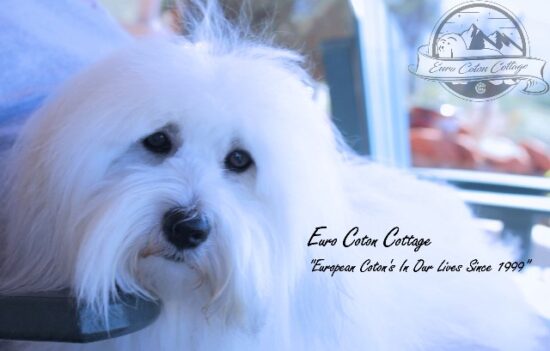
We have downsized and are now enjoying life with our beloved Nureyev from Cotonbrie in Italy.

For many years, we were dedicated hobby preservation breeders of the Coton de Tulear. Throughout our journey with this remarkable breed, we typically raised only one or two litters each year. In some years, Mother Nature had other plans, and we were not blessed with puppies at all.

Life unexpectedly changed when my husband suffered a serious accident. What initially appeared to be a minor fall onto gravel beside a sidewalk resulted in two life-threatening brain hemorrhages. He required emergency transport by medical helicopter to another city on two separate occasions.

After two lengthy hospitalizations and additional time in a physical therapy rehabilitation center, he is finally home and continues to improve. While we are grateful for his recovery, experiences such as this remind us that none of us knows what the future holds.

Our years with the Coton de Tulear have been incredibly rewarding. It has been a privilege to share this extraordinary breed, whose origins trace back to Madagascar, with families throughout the United States.

One of our greatest joys has been seeing nearly 80% of the puppies we produced go on to become trained and certified pet therapy dogs, enriching the lives of countless people.

Unfortunately, the Coton de Tulear community in the United States has changed dramatically over the years. What was once healthy competition among breeders devoted to preserving the traditional Coton has, in many instances, evolved into efforts to redefine the breed by altering many of its original characteristics.

From the very beginning, we imported our show and breeding foundation stock directly from Europe, maintaining bloodlines that trace back to Madagascar and are registered through the Fédération Cynologique Internationale (FCI).

Throughout our involvement with the breed, we watched increasing efforts by kennel clubs and breeders to promote variations in size, coat texture, coat color, and overall appearance that differ substantially from the historic breed standard. In our opinion, many of these changes move the breed farther away from the dog that was originally documented and treasured for centuries.

Historical writings dating back to the 1600s, including journals kept by merchant seamen, described the Coton de Tulear as a small companion dog with a distinctive appearance, temperament, structure, and a body often compared to that of a fox.

Over the years, we frequently found ourselves educating prospective puppy owners who had received information that conflicted with the breed’s documented history and established standards. We often encountered inquiries about the so-called “tall” or long-legged Coton de Tulear standing nearly as tall as a sporting dog, as well as requests for supposedly “rare” solid black, brown, chocolate, tan, or silver Cotons.

In our opinion, these dogs represent designer variations rather than the traditional Coton de Tulear. As preservation breeders, we often found ourselves defending the historic breed while newer interpretations were accepted with little question. That remains difficult for me to understand.

My own experience in the dog world began long before the Coton de Tulear entered my life. I grew up with Labrador Retrievers and later competed successfully in AKC conformation events.

During those years, I witnessed increasing pressure to promote colors and traits that departed from long-established breed standards. Although I campaigned the Number Two Labrador Retriever in the United States in the conformation ring, I ultimately chose to leave the AKC show world because I believed preservation should always take precedence over novelty.

Years later, I found myself witnessing many of the same trends within the Coton de Tulear community, which was deeply disappointing.

When we first became involved with this breed, we never imagined that attorneys would one day become part of our support team.

Over the years, we experienced hostility from individuals within the breeding community. Some accusations, emails, social media attacks, and verbal threats became serious enough that we were forced to retain legal counsel.

One breeder from West Virginia threatened to report us to federal authorities based solely on assumptions that we were illegally importing and selling puppies from Europe as unlicensed brokers. The allegations were entirely false and involved another individual—not us.

She even warned that we “lived in a glass house” and that “everyone knew what we were doing.”

After consulting an attorney, we were advised to take legal steps to protect ourselves, our property, and our dogs. The experience was extremely stressful and demonstrated how far parts of the breeding community had drifted from respectful disagreement and professional conduct.

Protecting ourselves required substantial legal expenses simply to investigate and respond to unfounded accusations.

Sadly, this became part of the reality of preservation breeding.

The financial obligations of responsibly breeding and maintaining a quality breeding program often amounted to thousands of dollars each month, regardless of whether puppies were available or a litter was expected.

Eventually, even our CPA advised us that it was time to retire. Year after year, our expenses continued to outweigh any income, raising concerns during tax preparation because a business cannot indefinitely operate without showing a profit.

As preservation hobby breeders, our mission has always been to protect and maintain the qualities that make the Coton de Tulear such an exceptional companion—its temperament, intelligence, health, longevity, and unmistakable character.

We have been blessed to watch many dogs from our breeding program live exceptionally long lives. Several reached 18 years of age, while one beloved male passed peacefully in his sleep only three weeks before his nineteenth birthday.

Today, relatively few breeders remain dedicated solely to preserving the traditional Coton de Tulear. Instead, we have watched growing popularity surround dogs that, in our opinion, no longer fully represent the breed as it originated in Madagascar.

Preservation has increasingly given way to modification.

Despite these challenges, we remain proud of our contributions to this wonderful breed.

We have always placed the welfare of our dogs and the preservation of the breed above politics, personal agendas, popularity, or financial gain. Every breeding decision we made was guided by what we believed was in the best interest of the breed and with deep respect for every dog entrusted to our care.

As we enter retirement, we do so with gratitude.

We are thankful for the many wonderful families, lifelong friends, puppy owners, veterinarians, and fellow preservation breeders who supported us throughout this remarkable journey. The relationships we have built and the lives enriched through these extraordinary dogs will always remain among our greatest blessings.

We leave the breed with mixed emotions. We are proud of what we accomplished, yet concerned about the direction in which the breed is heading.

Our sincere hope—perhaps even by some miracle—is that future generations of breeders will once again place preservation above reinvention and remain committed to protecting the authentic Coton de Tulear by preserving its history, temperament, structure, health, longevity, and heritage for generations to come.

If that happens, then the efforts of so many dedicated preservation breeders before us will not have been in vain.

For anyone searching for a Coton de Tulear, we encourage you to choose your breeder carefully. A responsible breeder should understand the breed’s history and be able to document the ancestry of their foundation stock—the parents and generations behind the puppies they produce.

This documentation is essential.

Registration with a kennel club alone is not a guarantee of authenticity or quality. Do your research, ask questions, and request documentation. In some registries, puppies may be registered without requiring complete parental pedigrees, making careful investigation even more important.

Finally, we would like to recognize one very special dog who helped shape our breeding program.

The grandsire of many of our puppies was Cotonbrie Hasta la Vista from Italy. His exceptional pedigree, structure, temperament, and heritage represented everything we believed the traditional Coton de Tulear should be.

The following photograph is of his sire.

http://www.cotonbrie.com/hasta

All of our adults are clear of these diseases, not a carrier,nor do they have the gene.

  • BNAt, also known as Neonatal Ataxia (NA) or Bandera’s Syndrome (BNAt), is a genetic mutation that affects the nervous system of Coton de Tulear dogs. The mutation damages the cerebellum, the part of the brain that controls coordination and movement.
  • CMR2 mutation is associated with the Coton de Tulear breed. Phenotype: Affected dogs typically present with multiple, discrete circular areas of retinal detachment around 15 weeks of age. Fluid accumulates under the detached retina resulting in gray, tan, orange or pink “blisters” in the eye.
  • DM, also known as Degenerative myelopathy, is a neurologic disorder that can affect the spinal cord of Coton de Tulear dogs. It’s caused by a mutation in the SOD1 gene, which is found in many dog breeds.
  • HU, also known as Hyperuricosuria, is a genetic condition in dogs that causes high levels of uric acid in the urine, which can lead to the formation of stones in the bladder or kidneys.
  • PH, also known as Primary hyperoxaluria (PH), is a rare, inherited metabolic disorder that affects the kidneys of Coton de Tulear dogs. It’s caused by a mutation in the AGXT gene, which prevents the body from breaking down glyoxylate, an organic compound. This leads to a buildup of oxalate and calcium oxalate crystals in the kidneys and other tissues, such as bones, joints, and muscles.
  • vWD1, also known as Von Willebrand disease type 1 (vWD1) is a genetic bleeding disorder that can affect Coton de Tulears and other dog breeds. Symptoms with vWD1 include low levels of von Willebrand factor (vWf), a protein that helps blood clot.


All of our adults are clear of these diseases, not a carrier, nor do they have the gene.

  • BNAt, also known as Neonatal Ataxia (NA) or Bandera’s Syndrome (BNAt), is a genetic mutation that affects the nervous system of Coton de Tulear dogs. The mutation damages the cerebellum, the part of the brain that controls coordination and movement.
  • CMR2 mutation is associated with the Coton de Tulear breed. Phenotype: Affected dogs typically present with multiple, discrete circular areas of retinal detachment around 15 weeks of age. Fluid accumulates under the detached retina resulting in gray, tan, orange or pink “blisters” in the eye.
  • DM, also known as Degenerative myelopathy, is a neurologic disorder that can affect the spinal cord of Coton de Tulear dogs. It’s caused by a mutation in the SOD1 gene, which is found in many dog breeds.
  • HU, also known as Hyperuricosuria, is a genetic condition in dogs that causes high levels of uric acid in the urine, which can lead to the formation of stones in the bladder or kidneys.
  • PH, also known as Primary hyperoxaluria (PH), is a rare, inherited metabolic disorder that affects the kidneys of Coton de Tulear dogs. It’s caused by a mutation in the AGXT gene, which prevents the body from breaking down glyoxylate, an organic compound. This leads to a buildup of oxalate and calcium oxalate crystals in the kidneys and other tissues, such as bones, joints, and muscles.
  • vWD1, also known as Von Willebrand disease type 1 (vWD1) is a genetic bleeding disorder that can affect Coton de Tulears and other dog breeds. Symptoms with vWD1 include low levels of von Willebrand factor (vWf), a protein that helps blood clot.

Training is what it is all about — to create a relaxed puppy and well socialized.

Coton de Tulear Puppy for sale Sedona AZ
Cotonbrie Nureyev Best Dance CGC, Italy FCI and ARBA Registered

   International & World Champion 2023 from Italy: Cotonbrie Hasta la Vista is the grandsire to our Coton puppies. Owned by Eli at Cotonbrie in Italy.

Did You Know?

  “The Rare Breed Canine” 

The Coton de Tulear is a rare dog breed due to its history and origins. 

The Coton de Tulear was recognized by the FCI Kennel Club in Europe in 1970, long before the AKC in the USA in 2013. For a long time, the only people who owned the Coton were members of the Malaga royal family in Madagascar and the only country they were found in was France, then the breed was imported into Europe in the 1950s. 

Coton de Tulear’s make excellent Therapy Dogs.  From their gentle temperament to their remarkable intelligence, the Coton de Tulear offers invaluable assistance and support to those with physical or emotional challenges. Their small size and non-threatening demeanor both work well to reduce anxiety or trepidation.

Our adults are trained, two are certified pet therapy dogs. About 80% of our puppies have gone on to become Certified Pet Therapy and Medical Service Assistant Canines!

Lorem ipsum dolor sit amet, consectetur adipiscing elit. Ut elit tellus, luctus nec ullamcorper mattis, pulvinar dapibus leo.